
You know what's funny?
Most B2B SaaS founders obsess over the wrong things.
They spend weeks debating button colors. They A/B test headlines at 2am. They hire a $3,000/month ads agency before they've even fixed the actual problem — which is that people land on their homepage and have absolutely no idea what the product does.
Not because the product is bad. Not because the founder can't explain it.
But because nobody sat down and thought: "What does a confused stranger need to see in the first 10 seconds to stick around?"
This article is about fixing that. We're going to walk through what actually moves the needle for SaaS companies trying to grow sign-ups — from your homepage, to your onboarding, to the emails you're probably not sending yet. Some of it you can do yourself. Some of it is worth hiring for.
Either way, let's get into it.
First, Understand Why People Leave Without Signing Up
Before you try to convert anyone, you need to understand what's happening.
The average SaaS website converts just 1.1% of visitors. Grafit One percent. That means 99 people out of every 100 who visit your site leave without doing anything.
That's not a traffic problem. That's a clarity problem.
People aren't signing up because they don't quickly understand:
What your product does
Who it's for
Why they should care right now
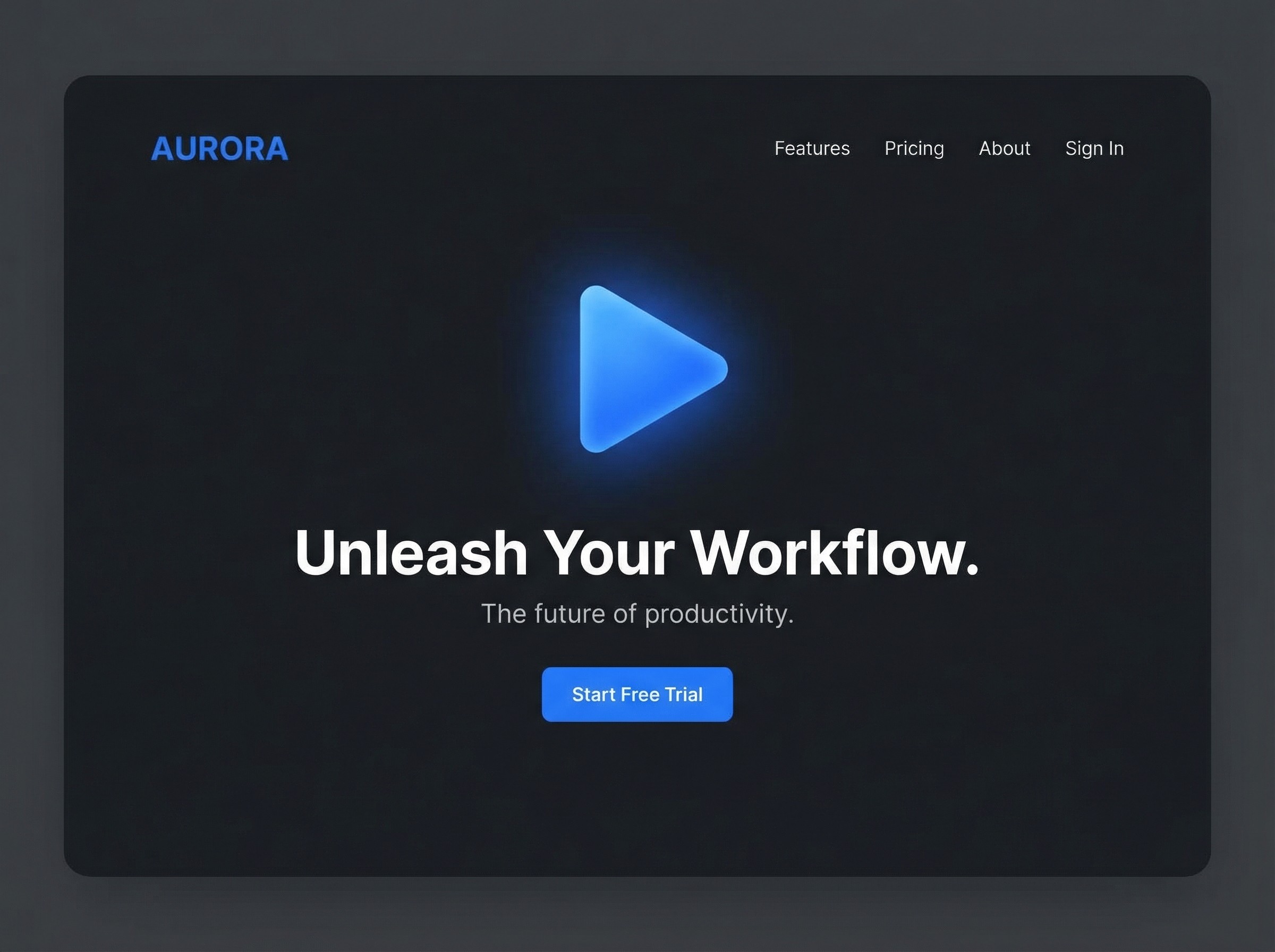
And the fastest, most effective way to solve all three at once? A good explainer video on your homepage.
The Explainer Video: Why It Works and How to Do It Right
Let's be direct about this. Landing pages with video see an 80–86% increase in conversions compared to pages without video content. Vidico
That's not a small improvement. For early-stage SaaS companies that are already fighting to get traction, that kind of lift can be the difference between 3 sign-ups a week and 15.
But here's where most startup founders go wrong with their explainer video — they make it about their product instead of about the person watching it.
Nobody opens your homepage thinking "tell me about your features." They're thinking "do I have this problem? Can this fix it? Is this for someone like me?"
Your video needs to answer those questions fast. Here's the framework:
0–5 seconds: Name the pain. Not your company name. The pain. "If you're a SaaS founder who's losing potential customers because your product is too hard to explain — this is for you."
5–20 seconds: Show the world after. What does their life look like when this problem is solved? More sign-ups. Less sales friction. A sales team that doesn't have to explain the product from scratch on every demo call.
20–50 seconds: Show the product briefly. Don't walk through every feature. Show the one thing that makes it click.
50–60 seconds: One CTA. "Start your free trial" or "Book a demo." Not both. Pick one and commit.
The highest-converting format right now is a raw, founder-led video — someone looking directly at the camera, explaining the value in plain language. Authenticity is beating polish. Aimers You don't need a $10,000 animation budget to start. A clean background, decent lighting, and a clear message will outperform an over-produced video that says nothing.
One detail most people skip: burn captions into the video. Most office workers watch videos on mute, and adding captions can boost engagement by 25–30%. Aimers
What Else Can Startups Do to Increase Sign-Ups? (The Stuff You Can DIY)
The video is the big one. But it's not the only lever. Here's what else actually works.
Fix Your Headline First
Your headline is the first thing people read. Most SaaS homepages have headlines like:
"AI-powered workflow orchestration for modern teams"
This tells me nothing. Is it for my team? What problem does it solve? Why should I keep reading?
Write your headline like you're explaining your product to a smart friend who's never heard of it:
Who it's for + what problem it solves + what outcome they get
"Help your sales team close more deals without adding another tool to their stack" "Automate your client reporting so you never spend a Sunday on spreadsheets again"
Simple. Specific. Speaks to pain points directly. That's what stops the scroll.
Add a "How It Works" Section — 3 Steps, No Jargon
After someone watches your video or reads your headline, they want quick confirmation that the product actually does what you said. Give it to them in three steps.
Step 1: Connect your [data/tool/team] Step 2: [Your product] does [specific thing] Step 3: You get [specific outcome]
This section serves the skimmers — and there are a lot of skimmers. Not everyone will watch your video. Some people just scroll fast looking for a reason to stay. A clean three-step breakdown gives them that reason.
Put Social Proof Next to Your CTA (Not at the Bottom)
Here's where most SaaS companies leave conversion on the table.
They collect testimonials. They put them at the bottom of the page. Nobody ever gets there.
The highest-converting pages embed real customer proof — tweets, G2 reviews, specific results — directly next to the sign-up button, because that's where last-minute doubt creeps in. Aimers
And the proof needs to be specific. Not "great product, 5 stars." That means nothing.
This means everything: "We went from a 2% to 8% conversion rate within 45 days of adding this to our homepage."
You don't need 50 testimonials. You need 2–3 really good ones with real numbers. For this reason, building out case studies early is worth the effort — even if they're just one-page PDFs or simple blog posts. Case studies do the selling for you when you're not in the room.
Simplify Your Sign-Up Form
You worked hard to get someone to click "sign up." Don't blow it with a 12-field form.
About 2–5% of website visitors convert to trial sign-ups overall, but top performers exceed 10%. Amra & Elma A huge part of the gap between 2% and 10% is friction. Specifically: how much you're asking people to give up before they've seen a single second of value.
Best practice for early-stage SaaS companies: ask for email and password. That's it. Get them into the product first. Collect the rest during onboarding when they already have a reason to stay.
The Part Most SaaS Founders Completely Ignore: Onboarding
Getting someone to sign up is step one. Keeping them long enough to convert to a paying customer is the actual challenge.
Most SaaS free trials fail because the experience doesn't help users reach their "aha moment" — the instant when they feel the product's value. Beyond Labs
Think about Figma. When you sign up, it loads a pre-filled demo workspace immediately. You don't stare at a blank screen wondering what to do. You're already inside a working project, clicking around, getting a feel for the tool before you've read a single help doc.
That's intentional. And that's what good onboarding does.
Here's what breaks onboarding for most SaaS companies:
No clear path to value. The user signs up and then just... sits there. Nothing prompts them to take the first meaningful action.
Too many options. You built 40 features. You put all 40 in the sidebar. The user doesn't know where to start and leaves.
No follow-up. The user signs up, gets busy, doesn't come back, and you do nothing.
Fix these three things and your trial-to-paid conversion rate goes up without changing anything else about the product.
For onboarding specifically, the goal is to get the user to their "first win" as fast as possible. What's the one thing they can do in under 5 minutes that makes them think "okay, this is actually useful"? Build your whole onboarding flow around that moment.
Email Sequences: The Most Underused Tool for SaaS Sign-Up Conversion
If you're not running email sequences to your trial users, you are leaving a significant amount of revenue behind.
Email marketing can greatly lower your customer acquisition cost and increase your SaaS conversion rate — but it only works when you laser-focus on your target audience and personalize the content. MADX Digital
Here's a simple 5-email onboarding sequence for B2B SaaS companies that works:
Email 1 (Immediately after sign-up): Welcome + one action. Don't write a novel. Tell them one thing to do right now to get value. Link directly to it.
Email 2 (Day 2): Show them the most popular feature. "Most people who sign up do X first — here's how." This is social proof and guidance in one.
Email 3 (Day 4): Address a common pain point. "If you're finding [specific thing] confusing, here's a 2-minute video that fixes it."
Email 4 (Day 7): A case study or quick win story. Show someone like them getting a real result. This is where a good case study pays for itself — just include a link.
Email 5 (Day 12): The nudge. If they haven't converted, this is a simple message: "Your trial ends in 2 days. Here's what you get on the paid plan." Keep it short. Make the upgrade link obvious.
This sequence alone — if you're not running anything like it — can meaningfully move your conversion rate. The message doesn't have to be fancy. It just has to be useful and timed right.
Using LinkedIn to Generate Qualified Leads for Your SaaS
Now let's talk about getting people into your funnel in the first place, because sign-up conversion only matters if you have traffic.
For early-stage SaaS companies, LinkedIn is one of the most underrated channels. Not for running ads. For building the kind of content that makes your ideal customer think "this person gets my world" before they've ever spoken to you.
Here's what works on LinkedIn right now for B2B SaaS founders:
Post about the problem, not the product. Your audience isn't searching for "best project management SaaS" on LinkedIn. They're reading posts about problems they recognize. Write about the frustrations your product solves. You'll attract the right people without ever mentioning your tool.
Show behind-the-scenes content. SaaS founders who post honestly about building — what's working, what's not, what they learned from a lost deal — consistently outperform polished marketing content. People trust people.
Use LinkedIn to warm up prospects before you message them. Spend 3–5 days liking and commenting on someone's posts before you reach out. When your message arrives, you're not a stranger. You're someone they've seen around.
Share your content marketing pieces. Every blog post you write should become a LinkedIn post. Not a link post — write out the key insight directly in the post, then link to the full article. LinkedIn rewards native content that keeps people on the platform.
Turn your best posts into carousels. A carousel of "5 reasons your SaaS homepage isn't converting" will get significantly more reach and saves than a single image post. For B2B SaaS marketing, carousels are one of the highest-engagement formats available right now.
The goal isn't to go viral. The goal is to consistently show up in front of the same 500–1,000 people who match your ideal customer profile, so that when they have the problem your product solves, you're the first person they think of.
That's how qualified leads come to you, instead of you chasing them.
The Product-Led Approach: Let the Product Do the Selling
If you're at a stage where you're thinking about scaling and want to reduce dependency on outbound sales, it's worth thinking about a product-led growth model.
Product-led growth basically means: instead of selling people on the product before they use it, you let them use it first and sell them on upgrading later. Slack, Notion, Figma, Dropbox — all built on this model.
For early-stage startups, you don't need to do a full product-led overhaul. But you can adopt some of the principles:
Lower the barrier to start. Remove credit card requirements. Shorten your sign-up flow. Let people experience the product with zero commitment.
Show value before you ask for anything. During onboarding, give users a taste of what the paid plan looks like. Reverse trials — where you temporarily give users access to premium features — are one of the most effective ways to show the value of upgrading without pushing a hard sell. Userpilot
Use in-app messages, not just email. When someone is actively inside your product is the best time to nudge them. A well-placed in-app message — "You've created 3 projects. Upgrade to unlock unlimited" — converts better than any cold email because the user is already experiencing the product.
Track time-to-value. How long does it take a new user to get their first meaningful result in your product? If the answer is "more than 15 minutes," you have an onboarding problem, not a conversion problem. Fix the onboarding first.
The Role of Your Sales Team at the Nurture Stage
At some point, for most B2B SaaS companies, humans need to be involved in the sales process. Not for every deal — but for the ones that matter.
A good sales team isn't there to cold call people. They're there to nurture the leads who have already shown interest — the ones who signed up for a free trial but didn't convert, the ones who booked a demo and went quiet, the ones who opened your emails but never clicked.
These people aren't gone. They're just not ready yet. And a timely, personal follow-up from a real human — not another automated email — can re-engage them.
Some CRM platforms make this easy by scoring leads and alerting your sales team when a lead crosses a certain engagement threshold. When someone visits your pricing page three times in a week, that's a signal. Your sales team should know about it and follow up.
The message doesn't need to be pushy. It just needs to be relevant: "Hey, I saw you were checking out our pricing page — happy to answer any questions or walk you through what's included in the plan."
That's it. Simple, human, and effective.
Content Marketing: How It Brings In Sign-Ups Indirectly (But Reliably)
The article you're reading right now is an example of content marketing at work.
Someone Googles "how to increase SaaS sign-ups." They find this article. They read it, find it useful, see that ContentBuck helps startups create explainer videos and content, and think — maybe they can help us too.
That's the whole game. You're not selling. You're being useful. And useful people get found.
For SaaS companies doing content marketing, a few things matter more than volume:
Target keywords your customers actually search. Not broad keywords like "SaaS marketing." Specific ones like "how to reduce trial churn for B2B SaaS" or "best onboarding emails for SaaS startups." These have lower competition and much higher buyer intent.
Write the article your customer needs, not the article that ranks. Google has gotten very good at telling the difference. An article that actually solves a problem will hold readers longer, get more shares, and earn more organic links than an article written purely for SEO.
One article that ranks is worth ten that don't. A lot of early-stage SaaS companies try to post 4x a week and wonder why nothing works. The math on this is simple: 1 article ranking on page 1 of Google for a relevant keyword will bring you more qualified leads every month than 30 articles that nobody finds.
Use your content to build your email list. Every piece of content should have a reason for someone to give you their email — a checklist, a template, a short guide. This turns traffic into a nurture audience you can reach anytime.
Putting It All Together: What To Focus On First
If you're an early-stage SaaS company reading this and feeling overwhelmed, here's the order of priority:
1. Homepage clarity first. Rewrite your headline. Add a clear "how it works" section. Put social proof next to your CTA. These are free and take a few hours.
2. Add an explainer video. This is the single highest-impact thing you can do for conversion rate. It doesn't have to be expensive. It has to be clear.
3. Fix your onboarding. Make sure new sign-ups reach a "first win" in under 5 minutes. If they don't, most of them will never come back.
4. Set up a basic email sequence. 5 emails over 14 days. Useful, personal, and timed to match where the user is in their trial.
5. Start creating content and showing up on LinkedIn. This is the long game. It won't bring you sign-ups tomorrow. But in 3–6 months, it's the thing that makes everything else easier.
The Bottom Line
Most B2B SaaS companies don't have a product problem. They don't have a pricing problem. They don't even have a traffic problem — at least, not primarily.
They have a clarity problem.
People visit and leave confused. They sign up and never come back. They book a demo and go quiet. At every stage, the root cause is usually the same: the message isn't clear enough, the onboarding doesn't get them to value fast enough, or the follow-up doesn't happen at all.
Landing pages with explainer videos convert at 34% higher rates than pages with text only. Vivideo That's a real, measurable impact. And it's just one piece.
Fix the clarity. Fix the onboarding. Show up consistently. The sign-ups follow.
You already built something worth using. Now make it impossible to misunderstand.
Want an explainer video that actually converts your visitors into paying customers? ContentBuck creates videos and content for early-stage SaaS startups → Book a free call
How B2B SaaS Startups Can Increase Sign-Ups
Join our newsletter
Navigation
Our Work
Pricing
Reviews
Blog
Social Media
X/Twitter
Contact Info
contentbuck@gmail.com
parth@contentbuck.com
© 2024 Content Buck. All rights reserved.